Top 6 Use Cases for AI-Powered Incident Investigation
Real-World Impact Across Industries
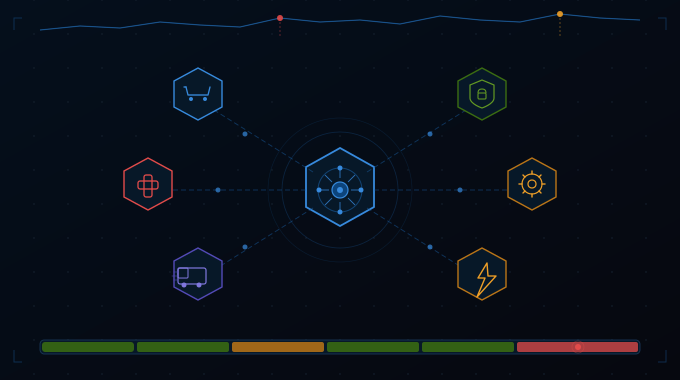
AI-powered incident investigation is transforming how organizations respond to disruptions by empowering teams to work faster and smarter. With AI, you can pinpoint root causes of incidents, reduce downtime, and keep critical operations on track. Whether you're a retailer contending with peak season sales, a financial institution safeguarding transactions, a healthcare provider delivering life-critical services, or a manufacturer managing round-the-clock production, AI delivers measurable results. Below, we explore how this technology is making a real difference across key industries, and how your business can start seeing these results sooner than you might think.
Retail and eCommerce
In retail, every second of downtime threatens sales and loyalty. Online platforms must be resilient, especially when digital experiences shape brand perception and customer retention.
AI-driven investigation helps retailers:
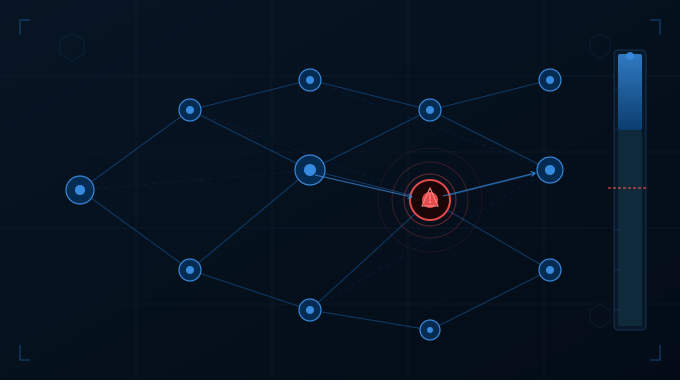
- Map all technical dependencies across eCommerce, payment gateways, and logistics. This gives your teams clear visibility into the entire digital retail ecosystem, from the website to warehouse to last-mile delivery.
- Rapidly pinpoint root causes of issues, such as failed checkouts, slow page loads, or inventory sync errors. Fast detection minimizes the duration of incidents, so revenue stays protected and customer journeys remain seamless.
- Break down operational silos, enabling customer experience, IT, and support teams to collaborate effectively. Everyone operates from the same incident timeline and has access to the relevant context needed for swift resolutions.
AI empowers retailers to protect the bottom line, boost productivity, and create shopping experiences that inspire confidence and repeat visits.
Financial Services
Financial institutions are trusted to keep services available, secure, and compliant at all times. Even minor disruptions or missed compliance steps can put reputations and customer trust at risk.
With AI-powered investigation, financial services organizations can:
- Automatically correlate application, infrastructure, and code changes to surface incidents before they impact critical systems, from online banking portals to ATM networks.
- Instantly collect, timestamp, and document incident evidence. Audits and regulatory reviews become smooth processes rather than stressful fire drills.
- Maintain a comprehensive, immutable record of every investigation. All findings, actions taken, and evidence are logged and integrated into your compliance workflows.
Through AI automation, financial services companies uphold rigorous SLAs, minimize unplanned downtime, and foster confidence with clients, regulators, and internal stakeholders alike.
Healthcare
In healthcare, operational reliability supports patient care. Any technical issue, a downtime in a patient records system, a medication delivery alert, or telemedicine glitch, can have real consequences for patient wellbeing.
AI-powered investigation enables healthcare teams to:
- Gather evidence instantly from electronic health record systems, clinical applications, medical devices, and operational platforms. Manual data collection is eliminated, freeing up valuable time.
- Deliver immediate root cause clarity so staff can respond with confidence. Automation ensures every incident is investigated consistently, supporting quality of care standards and safety protocols.
- Allow IT and clinical technology teams to spend less time troubleshooting technical issues and more time focusing on patient outcomes and service improvement initiatives.
By accelerating investigations and reducing repetitive manual tasks, healthcare organizations enhance operational resilience and keep the focus on what truly matters, patient health and safety.
Manufacturing
Manufacturers rely on constant uptime, every minute lost can mean missed quotas, production delays, or increased costs. Digital transformation in manufacturing brings together OT and IT systems, amplifying complexity and the need for a smarter approach to incident management.
With AI-powered investigation, manufacturers can:
- Instantly connect real-time data from production lines, robotic systems, supervisory control platforms, and supporting IT systems. When an incident occurs, AI pinpoints exactly where the issue began and why.
- Standardize investigations so that no knowledge is lost during shift changes or between distributed teams. Everyone can access the same clear, step-by-step record of the incident, supporting seamless handoffs and reducing error.
- Free up skilled engineers and operators from the burden of manual analysis. More time spent on process optimization and less on firefighting means improved output and continuous innovation.
The tangible result: higher operational efficiency, improved product quality, and more time for strategic initiatives and growth.
Transportation & Logistics
Transportation and logistics companies play a central role in worldwide commerce. Unexpected outages and process failures immediately impact shipment delivery, scheduling, and customer satisfaction.
AI-driven incident investigation empowers these organizations to:
- Trace incidents and disruptions across complex, multi-modal networks, from shipment tracking systems and fleet management platforms to warehouse automation tools and customer-facing portals.
- Identify and contain small problems early, averting larger supply chain disruptions and minimizing the risk of missed deliveries or breached contracts.
- Enable real-time, clear communication between operations and technical teams, so action is taken quickly and nothing falls through the cracks during handoffs.
With these capabilities, you deliver on your promises, establish your reliability, and maintain the smooth movement of goods and services around the globe.
Power Generation
Nonstop service is essential in power generation and utilities. One technical failure can disrupt the lives of thousands or even millions of people.
AI-powered investigation gives power providers:
- The capability to instantly detect failures across generation facilities, grid infrastructure, monitoring equipment, and distribution systems, often before end users even notice a service dip.
- Automated, comprehensive documentation for each incident. Every decision, action, and piece of evidence is recorded for internal review and regulatory compliance.
- A single source of truth for engineers, site operators, and field technicians. Data-driven collaboration accelerates repairs and system restoration while supporting a safe, resilient infrastructure.
By investing in AI, utilities maximize uptime, maintain regulatory confidence, and deliver consistent service to homes, businesses, and communities.
How to Know Your Business Is Ready
Wondering if now is the right time to introduce AI into your incident investigation process? You’re ready to take this step if any of the following are true for your business:
- Disruptions trigger real, measurable impact: lost revenue, missed commitments, negative customer experiences, or reputational harm.
- Your teams are stretched thin by manual, repetitive investigation steps, or knowledge walks out the door during turnover or shift transitions.
- Meeting new regulatory requirements, audit standards, or board-level risk expectations is becoming tougher each quarter.
- You’re scaling your operations and current processes can’t keep pace with the speed or complexity of new systems, products, or markets.
Adopting AI allows you to act with foresight. Every incident becomes an opportunity to learn, strengthening your systems, empowering your teams, and unlocking additional value for customers. With the right foundation in place, your business will operate with greater resilience, agility, and confidence, no matter what the future brings.
How to Get Started with AI-Powered Incident Investigation
Introducing AI to incident investigation is both an investment in your present resilience and your future growth. Here’s a proven approach to get started and scale.
Assess Your Current Process
Begin with a practical, honest assessment of your existing incident investigation practices. Identify pain points, such as:
- Where manual steps slow investigations and introduce risk of error or delay.
- Instances where incidents are recurring because root causes weren’t clearly identified.
- Knowledge gaps that surface during shift changes or team transitions, leading to repeated work.
Quantify these impacts in terms of time lost, risk exposure, and business costs. This clarity will fuel your business case and focus your improvement efforts.
Prioritize Use Cases
Determine where AI can deliver maximum impact by focusing on high-priority processes:
- Target areas with the highest incident volumes or those that directly affect customers, compliance obligations, or key revenue streams.
- Identify workflows where delayed responses translate to material business or reputational risk, such as payment processing, inventory availability, or safety-critical monitoring.
- Evaluate which teams manage the most time-consuming investigations and would benefit most from automation and centralized insights.
Choose an AI Investigation Platform
Invest in a platform that fits your current state, while supporting your industry-specific needs:
- Seek solutions that integrate smoothly with your existing data sources, applications, and process management tools.
- Ensure the platform supports automated evidence gathering, clear dependency mapping, and detailed investigation logs.
- Prioritize features that simplify compliance reporting, deliver real-time insights, and can be tailored to your unique operating environment.
Pilot with a Key Team
A focused pilot is the fastest way to demonstrate value:
- Select a team or function with a high incident frequency or complexity.
- Define clear success metrics, such as reduced investigation time, improved root cause detection, and fewer repeat incidents.
- Monitor not just technical gains, but the cultural and workflow benefits for team members (e.g., increased focus on proactive improvements, less firefighting).
Iterate based on feedback and outcomes, refining configuration and processes before you scale further.
Expand and Scale
Once you’ve validated success with your pilot:
- Roll out to additional teams, departments, or sites, with a clear training plan and engagement strategy.
- Grow your system integrations, covering more aspects of your technology and operational landscape.
- Gradually automate more of the investigation process, moving toward a proactive, learning-centered incident management culture.
Celebrate and communicate early wins broadly to build momentum and secure executive support for continued investment.
Empower Your Operations with OpsRabbit
At Nisum, we understand the challenges of scaling operations and ensuring smooth digital experiences. We work alongside you, listening, collaborating, and crafting solutions tailored to your needs.
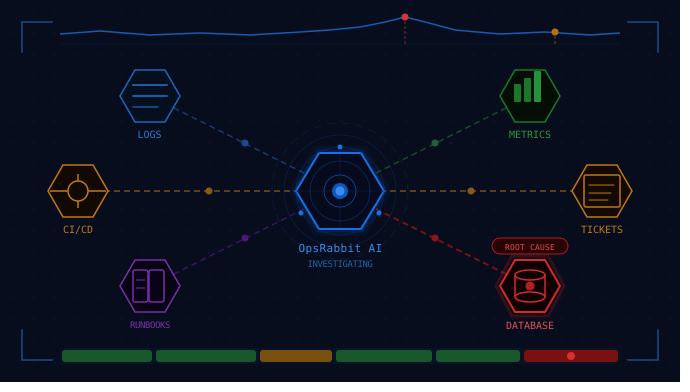
OpsRabbit provides clarity and control for your operations. Our team identifies process bottlenecks and automates repetitive tasks, allowing you to redirect time and resources where they matter most. With OpsRabbit, you gain real-time visibility into your systems, adaptable workflows, and reliable support as your requirements change, integrated seamlessly with your existing tools.
We are here to help you streamline processes and strengthen your team’s impact. Connect with us to explore how Nisum OpsRabbit addresses operational complexity and supports your growth initiatives.
FAQ: Incident Investigation
What is an incident investigation?
An incident investigation is a structured process we use to find out what happened during an unexpected event, why it happened, and how to prevent it from happening again. We look at the facts, talk to those involved, and identify areas for improvement.
Why is incident investigation important?
Investigating incidents helps you uncover the root cause behind mistakes, equipment failures, or safety issues. This means you can fix the underlying problem—not just the symptoms—and keep your team safer while protecting your business from repeated disruptions.