
<img height="1" width="1" style="display:none;" alt="" src="https://px.ads.linkedin.com/collect/?pid=7433348&amp;fmt=gif">
15 min read

AI Shopping & Agentic Commerce: Protocols, Use Cases 2026

Mar 17, 2026 11:27:10 AM

Agentic Commerce: The Next Operating System for Retail

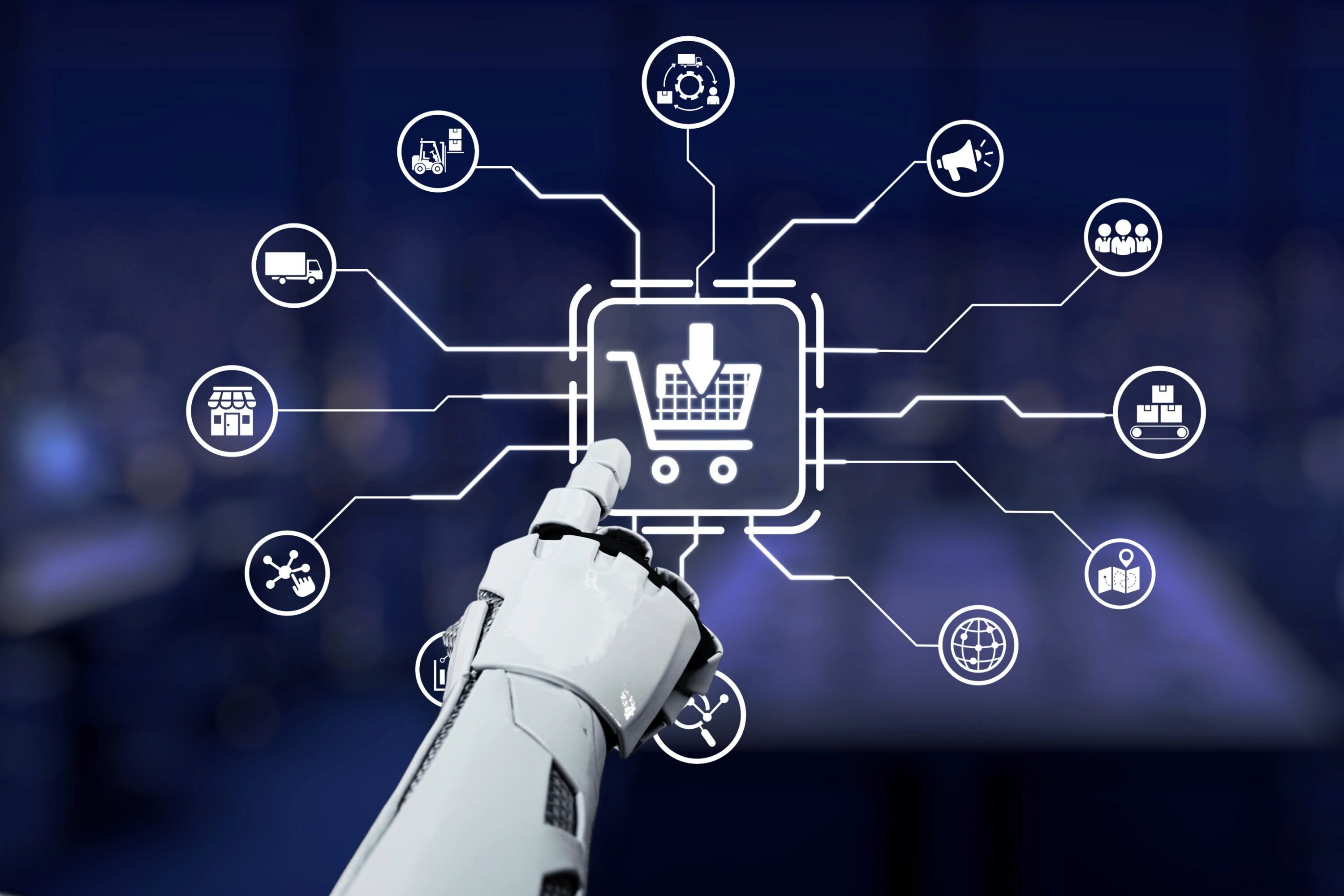
The retail landscape is shifting beneath our feet. For the past decade, we focused on optimizing the interface between human eyes and digital screens. We built faster mobile sites, smoother checkout flows, and more persuasive UX design to capture attention. But a new paradigm is emerging where the "customer" navigating your store might not be a human at all.
agentic-ai-in-retail-and-agentic-commerce

This is the dawn of agentic commerce, an ecosystem where autonomous AI agents act as the primary interface between consumer intent and retail fulfillment.

For retail technology leaders, this isn't just another channel like social commerce or voice search. It represents a fundamental restructuring of how value is exchanged. When software can independently browse, compare, negotiate, and transact on behalf of a human user, your traditional conversion funnels become obsolete.

We are moving from an era of attention economy (viewed by human eyes) to an era of intention economy (satisfying programmatic goals). This guide explores what agentic commerce is, how it radically alters retail operations, and the architectural decisions you need to make today to prepare your infrastructure for the agent-led future.

Defining Agentic Commerce

To understand where we are going, we need to clarify what we mean by "agentic."

In standard ecommerce, a user interacts directly with a graphical user interface (GUI). They click filters, scroll through images, and manually input payment data. In agentic commerce, the user delegates a high-level goal to an AI agent.

The user might say, "I need a hiking outfit for a trip to the Rockies in October, budget $300."

The agent then performs the following steps autonomously:

  1. Contextual Analysis: It understands "Rockies in October" means layering, waterproofing, and specific temperature ratings.
  2. Discovery: It queries multiple retailer APIs, not just searching keywords, but analyzing product specifications against the identified needs.
  3. Negotiation and Selection: It compares prices, shipping times, and return policies across brands.
  4. Transaction: It executes the purchase using stored payment credentials, often without the user ever visiting a product page.

The Role of the Agentic Commerce Protocol (ACP)

For this vision to scale, agents and retailers need a common language. This is where concepts like the Agentic Commerce Protocol (ACP) come into play. Just as HTTP gave browsers a standard way to read websites, agentic protocols give AI agents a standard way to read product data and execute transactions.

Without a standardized protocol, an AI agent is just a glorified screen scraper, prone to breaking whenever you update your frontend code. A robust agentic protocol allows your inventory, pricing, and checkout systems to expose structured, machine-readable endpoints that agents can query reliably. It transforms your store from a visual destination into a queryable database of solutions.

The Difference Between Automation and Agency

It is critical for tech leaders to distinguish between automation (which we have had for years) and agency.

  • Automation follows a rigid script: "If inventory drops below 10, reorder."
  • Agency involves reasoning and adaptation: "Inventory is low, but weather data suggests a demand drop, and a competitor just slashed prices. I will hold off on reordering and advise the marketing team to adjust ad spend."

In the context of AI shopping, an agent doesn't just execute a command; it solves a problem. This shift requires your technical infrastructure to be ready not just to transact, but to explain why a product is the right solution to a software program that demands logic, not emotional marketing copy.

How AI Agents Change the Customer Journey

The traditional sales funnel—Awareness, Consideration, Conversion, Retention—is designed for human psychology. Humans are visual, emotional, and prone to fatigue. AI agents are none of these things. They are logical, tireless, and hyper-efficient.

When the shopper is an algorithm, the journey changes drastically.

1. Discovery becomes Search-Agnostic

In a human-led journey, you pay for visibility on Google or Instagram. You optimize metadata for SEO keywords like "best running shoes."

In an agent-led journey, the agent doesn't care about your H1 tag optimization. It cares about structured data validity. It looks for attributes: material density, arch support specifications, weight in grams, and verified sustainability certifications. If your product data is trapped in unstructured PDF specs or marketing fluff, the agent cannot "see" it. Discovery shifts from "search engine optimization" to "answer engine optimization."

2. The Death of the "Browse" Phase

Humans browse. We wander through categories, get distracted by "you might also like" widgets, and impulse buy. Agents do not browse; they retrieve.

This eliminates the "consideration" phase as we know it. An AI agent can evaluate 10,000 SKUs across 50 retailers in milliseconds. It doesn't need to click through five pages of pagination. For the retailer, this means the opportunity to cross-sell or upsell must happen programmatically via API suggestions, not via visual pop-ups that annoy the agent.

3. High-Fidelity Personalization

Currently, personalization means "showing men's shirts because the user clicked on men's pants." It is reactive and often clumsy.

In agentic commerce, the agent carries the user's full context, their closet inventory, their calendar, their budget, their sizing constraints across different brands. When this agent approaches your store, it isn't guessing. It knows exactly what fits. Your systems must be ready to ingest this high-fidelity context (privacy permitting) and return a dynamically bundled offer that matches the request perfectly.

4. Zero-UI Checkout

The checkout page is the graveyard of conversion rates. Form friction, loading speeds, and account creation hurdles kill sales.

Agentic commerce promises a "Zero-UI" checkout. The transaction happens server-to-server. The agent authenticates, provides shipping token details, and processes payment via API. The human user simply receives a notification: "Your hiking boots are on the way." This requires your tech stack to support headless checkout flows that are decoupled from your frontend presentation layer.

Ready to unlock your next digital advantage?

Operational Impacts: Rethinking Retail Operations

Implementing agentic commerce isn't just about tweaking your website; it impacts the core of your retail operations. The feedback loops become faster, and the margin for error shrinks.

Inventory Visibility and Real-Time Accuracy

Humans might forgive you if they order a shirt and receive an email two days later saying it is out of stock. An AI agent will flag your retailer ID as "unreliable" and downgrade you in future queries.

To support agentic commerce retail flows, inventory data must be real-time and syndicatable. You cannot rely on batch updates that run overnight. If an agent queries your stock at 10:00 AM, the data must reflect the sale that happened at 9:59 AM. This puts pressure on your ERP and OMS (Order Management System) integration. We see many retailers struggling here because their legacy systems were designed for human latency, not machine speed.

Dynamic Pricing and Negotiations

Agents are capable of negotiating. In the near future, an agent might ping your pricing endpoint with a counter-offer: "My user will buy this TV right now if you match the competitor's price of $499 or throw in free shipping."

Your operations need to decide: Can we handle algorithmic negotiation? Do we have the margin rules codified in our pricing engine to accept or reject these offers automatically? Static pricing lists will become liabilities. You will need logic layers that can calculate profitability in real-time and respond to agent requests dynamically.

Customer Service as API Calls

Today, customer service is a cost center dominated by call centers and chatbots. In an agentic world, "customer service" is largely dispute resolution between your system and the user's agent.

If a delivery is delayed, your logistics platform should proactively notify the purchasing agent via API, which then updates the user's calendar. If a return is needed, the user's agent initiates the RMA (Return Merchandise Authorization) process programmatically. This reduces the burden on human support teams but increases the burden on your technical integration. The "service" is the reliability of your API.

The Shift in Merchandising Logic

Merchandisers typically arrange products based on visual appeal, e.g., putting the high-margin red dress in the center of the homepage.

In agentic commerce, "visual merchandising" is irrelevant for the transaction (though still important for brand building). Operational merchandising shifts to data enrichment. The most successful retailers will be those who employ "Data Merchandisers," teams dedicated to ensuring every SKU has exhaustive, structured attribute data. The better your data describes the product's utility, the more likely an agent is to select it.

Architecture for Agentic Commerce

How do you actually build this? You cannot buy "Agentic Commerce in a Box" yet. You have to architect for it. We recommend a composable, API-first approach that prepares your data for machine consumption.

1. The Headless Foundation

If your frontend and backend are tightly coupled (a monolithic architecture), you will struggle to serve AI agents. You need a headless commerce architecture where the backend logic (pricing, inventory, checkout) is separated from the frontend presentation.

This allows you to treat an AI agent as just another "head," similar to a mobile app or a smartwatch. You expose the same APIs to the agent that you expose to your React frontend. This ensures consistency and reduces technical debt.

2. Structured Data Layers (The Semantic Web)

Your product catalog needs to be semantically rich. We are talking about implementing Schema.org standards to the letter and potentially adopting newer standards emerging from the Agentic Commerce Protocol discussions.

Your PIM (Product Information Management) system becomes the source of truth. It must support granular attributes. Instead of a description field that says "Great for winter," you need a structured field: season: winter, min_temp: -10C, material: wool. Large Language Models (LLMs) can parse text, but structured data ensures accuracy and trust.

3. API Rate Limiting and Security

Opening your doors to agents means opening your doors to bots. You need sophisticated API gateways that can distinguish between a legitimate shopping agent (like a future version of ChatGPT or Alexa) and a malicious scraper or a DDoS attack.

You will need to implement:

  • Token-based authentication for verified agents.
  • Rate limiting strategies that allow high-volume queries from trusted partners while throttling unknowns.
  • Bot management tools that analyze behavioral patterns, even for non-human traffic.

4. Vector Databases for Semantic Search

Traditional keyword search (SQL 'LIKE' queries) fails with natural language. To support AI shopping behavior, you should explore implementing vector databases (or vector search capabilities within your existing stack).

Vector search converts product data into mathematical vectors (numbers). This allows the system to understand relationships. It knows that "crimson" is close to "red" and that "running shoe" is semantically related to "marathon gear." This aligns your search infrastructure with the way AI models "think" and retrieve information.

Use Cases: What This Looks Like in Practice

To make this concrete, let's look at three scenarios where agentic commerce reshapes the retail experience.

Use Case A: The Replenishment Agent (CPG & Grocery)

The Scenario: A customer's smart fridge or home assistant notices milk and coffee are low. It also knows the user is training for a marathon and needs high-protein snacks.

** The Agentic Flow:**

  1. The agent queries the API of the user's preferred grocer.
  2. It builds a cart based on past purchase history (brand loyalty).
  3. It cross-references the "marathon training" goal to find new protein bars that are on sale and highly rated for athletes.
  4. It optimizes the delivery window based on the user's Google Calendar.
  5. It executes the order.

Retailer Requirement: The grocer needed an API capable of accepting complex "basket building" queries and a logistics API that could read external calendar data to suggest slots.

Use Case B: The Stylist Agent (Fashion & Apparel)

The Scenario: A user has a wedding to attend in Italy. They upload the invitation (visual style) and their budget to their personal style agent.

The Agentic Flow:

  1. The agent analyzes the visual vibe of the invitation (rustic, formal).
  2. It scrapes inventory from five different luxury retailers.
  3. It filters for the user's size (which is stored in the agent's memory).
  4. It engages a retailer's "Virtual Try-On" API, sending the user's avatar to generate a preview.
  5. It presents the user with three curated options. The user picks one, and the agent buys it.

Retailer Requirement: The fashion retailer needed high-quality visual data, accurate sizing charts in a standardized format, and an exposed API for the virtual try-on engine.

Use Case C: The Procurement Agent (B2B Retail)

The Scenario: A small business owner needs to restock office supplies but wants to reduce costs by 10%.

The Agentic Flow:

  1. The business's procurement agent audits last month's invoices.
  2. It broadcasts a "Request for Quote" (RFQ) to three office supply retailers.
  3. Retailer A's system automatically responds with standard pricing.
  4. Retailer B's system (equipped with dynamic agentic pricing) sees the volume and offers a 12% discount for a 6-month commitment.
  5. The agent accepts Retailer B's offer and sets up the recurring billing.

Retailer Requirement: Retailer B won the contract because their B2B commerce platform had automated negotiation logic and could respond to a programmatic RFQ instantly.

Best Practices for Implementation

You don't need to rebuild your entire stack tomorrow. However, you do need to start laying the groundwork. Here is how we advise our clients to approach this transition.

1. Audit Your Data Hygiene

This is the most unglamorous but essential step. If your product data is messy, inconsistent, or locked in PDFs, you are invisible to agents.

  • Action: Conduct a comprehensive audit of your PIM. meaningful attributes. Ensure 100% of your catalog has standardized technical specifications.

2. Standardize Your APIs

Review your API documentation. Is it written only for internal developers, or could an external entity understand it?

  • Action: Adopt OpenAPI (Swagger) specifications. Ensure your endpoints are self-documenting. If you are adventurous, look into early drafts of the Agentic Commerce Protocol or similar open standards to see how the industry is formatting transaction requests.

3. Experiment with "Agent-Ready" Channels

You don't have to wait for a universal protocol. Platforms like OpenAI are already allowing businesses to build "GPTs" or plugins.

  • Action: Build a pilot. Create a custom GPT for your store that utilizes your existing APIs to answer questions and recommend products. This acts as a sandbox to test how AI interprets your data and where your logic gaps are.

4. Rethink Your Metrics

Conversion Rate (CR) and Time on Site (ToS) are human metrics. An agent spends 0.01 seconds on your site.

  • Action: Start tracking "API Success Rate," "Inventory Query Accuracy," and "Programmatic Conversion." You need to measure how well machines are interacting with your business, not just humans.

5. Prioritize Trust and Privacy

Users will only delegate purchasing power to agents if they trust the ecosystem.

  • Action: Be transparent about how you handle data from AI agents. Ensure your security protocols are robust. If a user feels their agent was manipulated by a retailer's algorithm into buying a sub-par product, that trust is broken forever.

Ready to unlock your next digital advantage?

The Executive Decision

Agentic commerce is not about removing the human from retail; it is about removing the friction. It empowers your customers to offload the chore of shopping so they can enjoy the result of the purchase.

For the C-suite, the mandate is clear: Stop building technology solely for eyes and thumbs. Start building for logic and code.

The retailers who win the next decade will be those who realize that their most valuable customer might be a piece of software. They will be the ones who build the cleanest APIs, the most structured data, and the most flexible operations.

We are entering a world where your store is everywhere and nowhere at the same time, existing as a fluid set of services called upon by intelligent agents. It is a brave new world for retail operations, and the time to architect for it is now.
Nisum

Nisum

Founded in California in 2000, Nisum is a digital commerce company focused on strategic IT initiatives using integrated solutions that deliver real and measurable growth.

Have feedback? Leave a comment!

Featured

Blog by Topics

See All
15 minutos de lectura

AI Shopping & Agentic Commerce: Protocols, Use Cases 2026

Mar 17, 2026 11:27:10 AM

Agentic Commerce: The Next Operating System for Retail

The retail landscape is shifting beneath our feet. For the past decade, we focused on optimizing the interface between human eyes and digital screens. We built faster mobile sites, smoother checkout flows, and more persuasive UX design to capture attention. But a new paradigm is emerging where the "customer" navigating your store might not be a human at all.

agentic-ai-in-retail-and-agentic-commerce

This is the dawn of agentic commerce, an ecosystem where autonomous AI agents act as the primary interface between consumer intent and retail fulfillment.

For retail technology leaders, this isn't just another channel like social commerce or voice search. It represents a fundamental restructuring of how value is exchanged. When software can independently browse, compare, negotiate, and transact on behalf of a human user, your traditional conversion funnels become obsolete.

We are moving from an era of attention economy (viewed by human eyes) to an era of intention economy (satisfying programmatic goals). This guide explores what agentic commerce is, how it radically alters retail operations, and the architectural decisions you need to make today to prepare your infrastructure for the agent-led future.

Defining Agentic Commerce

To understand where we are going, we need to clarify what we mean by "agentic."

In standard ecommerce, a user interacts directly with a graphical user interface (GUI). They click filters, scroll through images, and manually input payment data. In agentic commerce, the user delegates a high-level goal to an AI agent.

The user might say, "I need a hiking outfit for a trip to the Rockies in October, budget $300."

The agent then performs the following steps autonomously:

  1. Contextual Analysis: It understands "Rockies in October" means layering, waterproofing, and specific temperature ratings.
  2. Discovery: It queries multiple retailer APIs, not just searching keywords, but analyzing product specifications against the identified needs.
  3. Negotiation and Selection: It compares prices, shipping times, and return policies across brands.
  4. Transaction: It executes the purchase using stored payment credentials, often without the user ever visiting a product page.

The Role of the Agentic Commerce Protocol (ACP)

For this vision to scale, agents and retailers need a common language. This is where concepts like the Agentic Commerce Protocol (ACP) come into play. Just as HTTP gave browsers a standard way to read websites, agentic protocols give AI agents a standard way to read product data and execute transactions.

Without a standardized protocol, an AI agent is just a glorified screen scraper, prone to breaking whenever you update your frontend code. A robust agentic protocol allows your inventory, pricing, and checkout systems to expose structured, machine-readable endpoints that agents can query reliably. It transforms your store from a visual destination into a queryable database of solutions.

The Difference Between Automation and Agency

It is critical for tech leaders to distinguish between automation (which we have had for years) and agency.

  • Automation follows a rigid script: "If inventory drops below 10, reorder."
  • Agency involves reasoning and adaptation: "Inventory is low, but weather data suggests a demand drop, and a competitor just slashed prices. I will hold off on reordering and advise the marketing team to adjust ad spend."

In the context of AI shopping, an agent doesn't just execute a command; it solves a problem. This shift requires your technical infrastructure to be ready not just to transact, but to explain why a product is the right solution to a software program that demands logic, not emotional marketing copy.

How AI Agents Change the Customer Journey

The traditional sales funnel—Awareness, Consideration, Conversion, Retention—is designed for human psychology. Humans are visual, emotional, and prone to fatigue. AI agents are none of these things. They are logical, tireless, and hyper-efficient.

When the shopper is an algorithm, the journey changes drastically.

1. Discovery becomes Search-Agnostic

In a human-led journey, you pay for visibility on Google or Instagram. You optimize metadata for SEO keywords like "best running shoes."

In an agent-led journey, the agent doesn't care about your H1 tag optimization. It cares about structured data validity. It looks for attributes: material density, arch support specifications, weight in grams, and verified sustainability certifications. If your product data is trapped in unstructured PDF specs or marketing fluff, the agent cannot "see" it. Discovery shifts from "search engine optimization" to "answer engine optimization."

2. The Death of the "Browse" Phase

Humans browse. We wander through categories, get distracted by "you might also like" widgets, and impulse buy. Agents do not browse; they retrieve.

This eliminates the "consideration" phase as we know it. An AI agent can evaluate 10,000 SKUs across 50 retailers in milliseconds. It doesn't need to click through five pages of pagination. For the retailer, this means the opportunity to cross-sell or upsell must happen programmatically via API suggestions, not via visual pop-ups that annoy the agent.

3. High-Fidelity Personalization

Currently, personalization means "showing men's shirts because the user clicked on men's pants." It is reactive and often clumsy.

In agentic commerce, the agent carries the user's full context, their closet inventory, their calendar, their budget, their sizing constraints across different brands. When this agent approaches your store, it isn't guessing. It knows exactly what fits. Your systems must be ready to ingest this high-fidelity context (privacy permitting) and return a dynamically bundled offer that matches the request perfectly.

4. Zero-UI Checkout

The checkout page is the graveyard of conversion rates. Form friction, loading speeds, and account creation hurdles kill sales.

Agentic commerce promises a "Zero-UI" checkout. The transaction happens server-to-server. The agent authenticates, provides shipping token details, and processes payment via API. The human user simply receives a notification: "Your hiking boots are on the way." This requires your tech stack to support headless checkout flows that are decoupled from your frontend presentation layer.

Ready to unlock your next digital advantage?

Operational Impacts: Rethinking Retail Operations

Implementing agentic commerce isn't just about tweaking your website; it impacts the core of your retail operations. The feedback loops become faster, and the margin for error shrinks.

Inventory Visibility and Real-Time Accuracy

Humans might forgive you if they order a shirt and receive an email two days later saying it is out of stock. An AI agent will flag your retailer ID as "unreliable" and downgrade you in future queries.

To support agentic commerce retail flows, inventory data must be real-time and syndicatable. You cannot rely on batch updates that run overnight. If an agent queries your stock at 10:00 AM, the data must reflect the sale that happened at 9:59 AM. This puts pressure on your ERP and OMS (Order Management System) integration. We see many retailers struggling here because their legacy systems were designed for human latency, not machine speed.

Dynamic Pricing and Negotiations

Agents are capable of negotiating. In the near future, an agent might ping your pricing endpoint with a counter-offer: "My user will buy this TV right now if you match the competitor's price of $499 or throw in free shipping."

Your operations need to decide: Can we handle algorithmic negotiation? Do we have the margin rules codified in our pricing engine to accept or reject these offers automatically? Static pricing lists will become liabilities. You will need logic layers that can calculate profitability in real-time and respond to agent requests dynamically.

Customer Service as API Calls

Today, customer service is a cost center dominated by call centers and chatbots. In an agentic world, "customer service" is largely dispute resolution between your system and the user's agent.

If a delivery is delayed, your logistics platform should proactively notify the purchasing agent via API, which then updates the user's calendar. If a return is needed, the user's agent initiates the RMA (Return Merchandise Authorization) process programmatically. This reduces the burden on human support teams but increases the burden on your technical integration. The "service" is the reliability of your API.

The Shift in Merchandising Logic

Merchandisers typically arrange products based on visual appeal, e.g., putting the high-margin red dress in the center of the homepage.

In agentic commerce, "visual merchandising" is irrelevant for the transaction (though still important for brand building). Operational merchandising shifts to data enrichment. The most successful retailers will be those who employ "Data Merchandisers," teams dedicated to ensuring every SKU has exhaustive, structured attribute data. The better your data describes the product's utility, the more likely an agent is to select it.

Architecture for Agentic Commerce

How do you actually build this? You cannot buy "Agentic Commerce in a Box" yet. You have to architect for it. We recommend a composable, API-first approach that prepares your data for machine consumption.

1. The Headless Foundation

If your frontend and backend are tightly coupled (a monolithic architecture), you will struggle to serve AI agents. You need a headless commerce architecture where the backend logic (pricing, inventory, checkout) is separated from the frontend presentation.

This allows you to treat an AI agent as just another "head," similar to a mobile app or a smartwatch. You expose the same APIs to the agent that you expose to your React frontend. This ensures consistency and reduces technical debt.

2. Structured Data Layers (The Semantic Web)

Your product catalog needs to be semantically rich. We are talking about implementing Schema.org standards to the letter and potentially adopting newer standards emerging from the Agentic Commerce Protocol discussions.

Your PIM (Product Information Management) system becomes the source of truth. It must support granular attributes. Instead of a description field that says "Great for winter," you need a structured field: season: winter, min_temp: -10C, material: wool. Large Language Models (LLMs) can parse text, but structured data ensures accuracy and trust.

3. API Rate Limiting and Security

Opening your doors to agents means opening your doors to bots. You need sophisticated API gateways that can distinguish between a legitimate shopping agent (like a future version of ChatGPT or Alexa) and a malicious scraper or a DDoS attack.

You will need to implement:

  • Token-based authentication for verified agents.
  • Rate limiting strategies that allow high-volume queries from trusted partners while throttling unknowns.
  • Bot management tools that analyze behavioral patterns, even for non-human traffic.

4. Vector Databases for Semantic Search

Traditional keyword search (SQL 'LIKE' queries) fails with natural language. To support AI shopping behavior, you should explore implementing vector databases (or vector search capabilities within your existing stack).

Vector search converts product data into mathematical vectors (numbers). This allows the system to understand relationships. It knows that "crimson" is close to "red" and that "running shoe" is semantically related to "marathon gear." This aligns your search infrastructure with the way AI models "think" and retrieve information.

Use Cases: What This Looks Like in Practice

To make this concrete, let's look at three scenarios where agentic commerce reshapes the retail experience.

Use Case A: The Replenishment Agent (CPG & Grocery)

The Scenario: A customer's smart fridge or home assistant notices milk and coffee are low. It also knows the user is training for a marathon and needs high-protein snacks.

** The Agentic Flow:**

  1. The agent queries the API of the user's preferred grocer.
  2. It builds a cart based on past purchase history (brand loyalty).
  3. It cross-references the "marathon training" goal to find new protein bars that are on sale and highly rated for athletes.
  4. It optimizes the delivery window based on the user's Google Calendar.
  5. It executes the order.

Retailer Requirement: The grocer needed an API capable of accepting complex "basket building" queries and a logistics API that could read external calendar data to suggest slots.

Use Case B: The Stylist Agent (Fashion & Apparel)

The Scenario: A user has a wedding to attend in Italy. They upload the invitation (visual style) and their budget to their personal style agent.

The Agentic Flow:

  1. The agent analyzes the visual vibe of the invitation (rustic, formal).
  2. It scrapes inventory from five different luxury retailers.
  3. It filters for the user's size (which is stored in the agent's memory).
  4. It engages a retailer's "Virtual Try-On" API, sending the user's avatar to generate a preview.
  5. It presents the user with three curated options. The user picks one, and the agent buys it.

Retailer Requirement: The fashion retailer needed high-quality visual data, accurate sizing charts in a standardized format, and an exposed API for the virtual try-on engine.

Use Case C: The Procurement Agent (B2B Retail)

The Scenario: A small business owner needs to restock office supplies but wants to reduce costs by 10%.

The Agentic Flow:

  1. The business's procurement agent audits last month's invoices.
  2. It broadcasts a "Request for Quote" (RFQ) to three office supply retailers.
  3. Retailer A's system automatically responds with standard pricing.
  4. Retailer B's system (equipped with dynamic agentic pricing) sees the volume and offers a 12% discount for a 6-month commitment.
  5. The agent accepts Retailer B's offer and sets up the recurring billing.

Retailer Requirement: Retailer B won the contract because their B2B commerce platform had automated negotiation logic and could respond to a programmatic RFQ instantly.

Best Practices for Implementation

You don't need to rebuild your entire stack tomorrow. However, you do need to start laying the groundwork. Here is how we advise our clients to approach this transition.

1. Audit Your Data Hygiene

This is the most unglamorous but essential step. If your product data is messy, inconsistent, or locked in PDFs, you are invisible to agents.

  • Action: Conduct a comprehensive audit of your PIM. meaningful attributes. Ensure 100% of your catalog has standardized technical specifications.

2. Standardize Your APIs

Review your API documentation. Is it written only for internal developers, or could an external entity understand it?

  • Action: Adopt OpenAPI (Swagger) specifications. Ensure your endpoints are self-documenting. If you are adventurous, look into early drafts of the Agentic Commerce Protocol or similar open standards to see how the industry is formatting transaction requests.

3. Experiment with "Agent-Ready" Channels

You don't have to wait for a universal protocol. Platforms like OpenAI are already allowing businesses to build "GPTs" or plugins.

  • Action: Build a pilot. Create a custom GPT for your store that utilizes your existing APIs to answer questions and recommend products. This acts as a sandbox to test how AI interprets your data and where your logic gaps are.

4. Rethink Your Metrics

Conversion Rate (CR) and Time on Site (ToS) are human metrics. An agent spends 0.01 seconds on your site.

  • Action: Start tracking "API Success Rate," "Inventory Query Accuracy," and "Programmatic Conversion." You need to measure how well machines are interacting with your business, not just humans.

5. Prioritize Trust and Privacy

Users will only delegate purchasing power to agents if they trust the ecosystem.

  • Action: Be transparent about how you handle data from AI agents. Ensure your security protocols are robust. If a user feels their agent was manipulated by a retailer's algorithm into buying a sub-par product, that trust is broken forever.

Ready to unlock your next digital advantage?

The Executive Decision

Agentic commerce is not about removing the human from retail; it is about removing the friction. It empowers your customers to offload the chore of shopping so they can enjoy the result of the purchase.

For the C-suite, the mandate is clear: Stop building technology solely for eyes and thumbs. Start building for logic and code.

The retailers who win the next decade will be those who realize that their most valuable customer might be a piece of software. They will be the ones who build the cleanest APIs, the most structured data, and the most flexible operations.

We are entering a world where your store is everywhere and nowhere at the same time, existing as a fluid set of services called upon by intelligent agents. It is a brave new world for retail operations, and the time to architect for it is now.
Nisum

Nisum

Founded in California in 2000, Nisum is a digital commerce company focused on strategic IT initiatives using integrated solutions that deliver real and measurable growth.

¿Tienes algún comentario sobre este? Déjanoslo saber!

Destacados

Blogs por tema

See All